The trek continues to
Albuquerque
The Duke City — where balloons soar & Route 66 neon lights ancient adobe
(2023 est.)
Albuquerque is a city defined by collision and continuity. Situated in the high-desert rift of the Rio Grande Valley beneath the dramatic granite face of the Sandia Mountains, the "Duke City"—named for the 17th-century Spanish Duke of Alburquerque—rests on layers of deep time. Centuries before asphalt carved its way across the continent, Pueblo agriculturalists engineered sophisticated villages along the riverbanks, shaping the earth into pottery and sacred architecture. Millennia later, Route 66 sliced directly through the city's heart, bringing neon lights, mid-century chrome, and automotive wanderlust. Here, Art Deco absorbed Indigenous geometry to create Pueblo Deco, Route 66 motor courts were built around central courtyards that mirror the communal plazas of ancient Pueblo architecture, and turquoise, mined from prehistoric hills, became the shimmering badge of Southwestern identity.
The Mother Road & Pueblo Deco
Central Avenue & The KiMo Theatre
Route 66 in Albuquerque is unique: Central Avenue constitutes the longest continuous urban stretch of the highway anywhere in America, spanning 18 uninterrupted miles (29 km). John Steinbeck famously christened the route "the Mother Road" in his 1939 novel The Grapes of Wrath, and nowhere is that scale more evident than here. Originally navigating a meandering north-south route before a 1937 realignment flattened it into a straight east-west ribbon, Central Avenue transformed into a dense strip of neon signs and roadside motels.
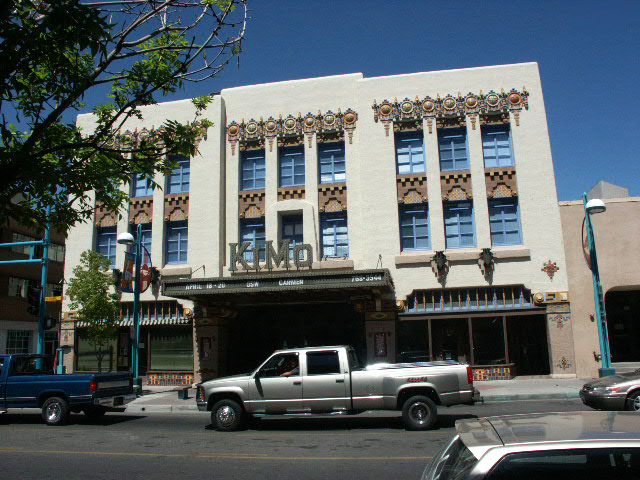
At the corner of 5th Street and Central Avenue stands the undisputed crown jewel of Southwestern architecture: the KiMo Theatre. Designed by architect Carl Boller and opened in 1927, it is a masterclass in Pueblo Deco. The building's stucco massing mirrors the stepped terraces of an ancient Pueblo village, trimmed with hand-painted terra cotta shield medallions. Inside, buffalo skull sconces with glowing amber eyes are mounted on the walls, while plaster beams replicate traditional wooden vigas hand-painted with Navajo and Pueblo symbols.
.jpg)
Nob Hill Neon
Driving east up the hill from downtown brings you to Nob Hill, Albuquerque's first automobile-centric suburb. During the postwar golden age of auto travel, merchants commissioned custom, free-standing neon marquees to catch the eyes of motorists. Shortly after sunset, Nob Hill lights up in brilliant shades of cobalt blue and fiery crimson.
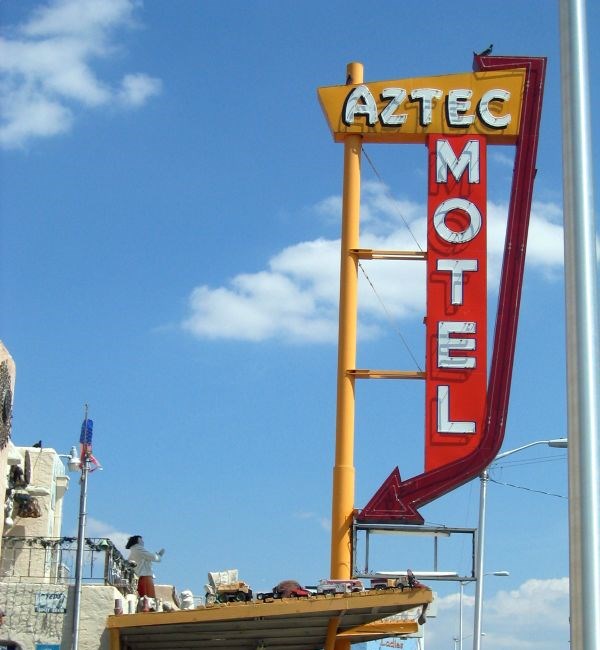
Preservation here is a running argument rather than a settled fact. The city has fought to keep "orphan signs" — marquees whose businesses are long gone — standing and wired, but not every fight is won: the Aztec Motel — built in 1932, the oldest continuously operating Route 66 motel in New Mexico, its frontage encrusted in the 1990s with hundreds of found objects by a resident who simply kept going — came down in 2011. Its sign was taken away in 2015 for a restoration and a new home that have yet to materialise.
_001.jpg)
The Motor Courts
Albuquerque preserves one of the densest remaining collections of historic Route 66 motor courts in the nation. The El Vado Motel (1937) wraps its guest rooms around a central courtyard plaza in Spanish Pueblo Revival style, while the De Anza Motor Lodge (1939) features extraordinary basement murals depicting the sacred Zuni Shalako ceremony.
Old Town and the Plaza
The 1706 Villa
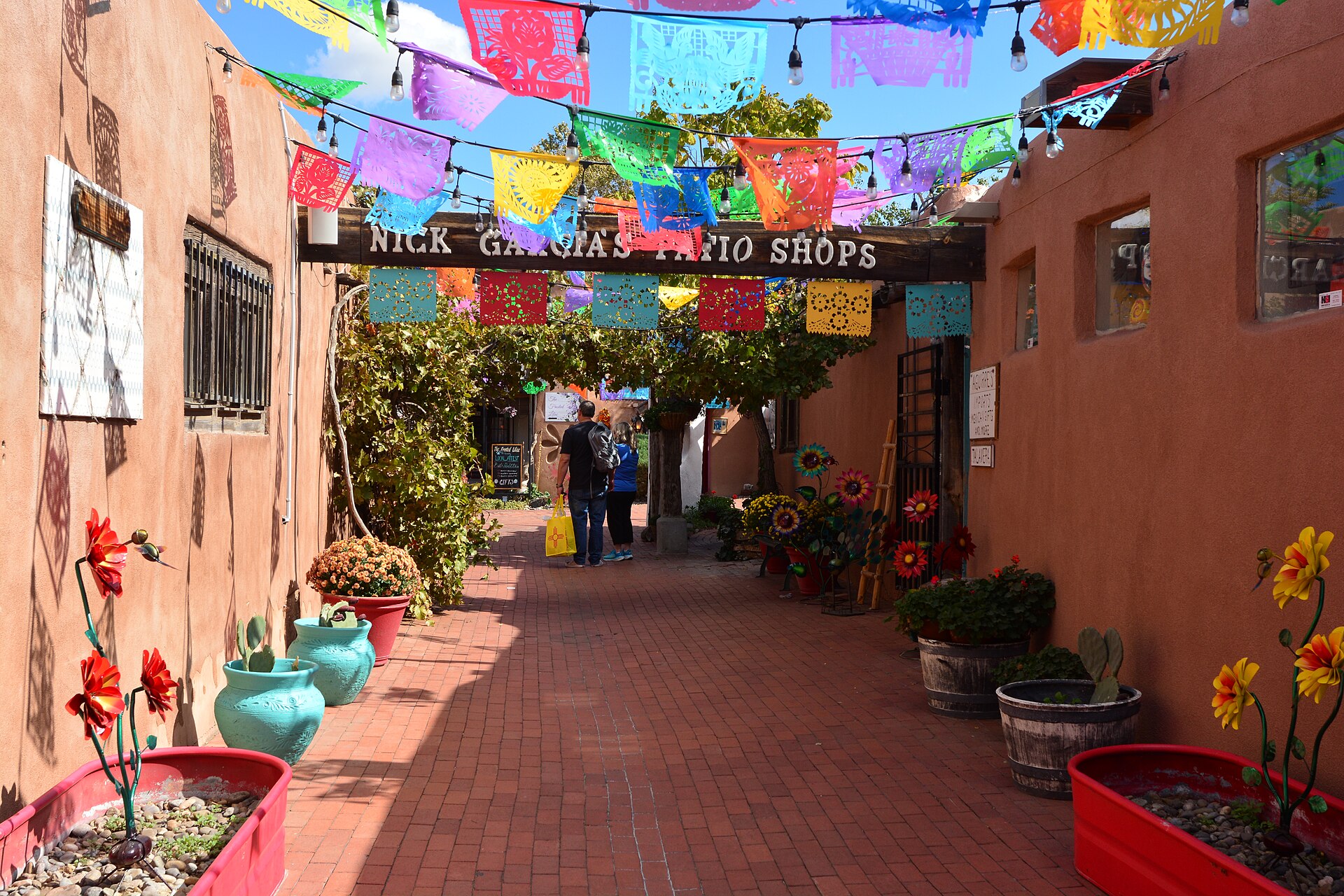
Two centuries before Route 66, there was a plaza. Old Town is the original Albuquerque — a Spanish colonial villa recognized in 1706 and laid out to the pattern the crown required of every new settlement under the Laws of the Indies: streets on a grid, a rectangular open plaza, and the church on one side of it.
Ten blocks of low adobe survive around it, wrapped in shaded portales and given over now to galleries, silver dealers and chile shops. It stayed a separate community from the railroad town that grew up two miles east in 1880, and only became a neighborhood of the city it founded when Albuquerque annexed it in 1949.
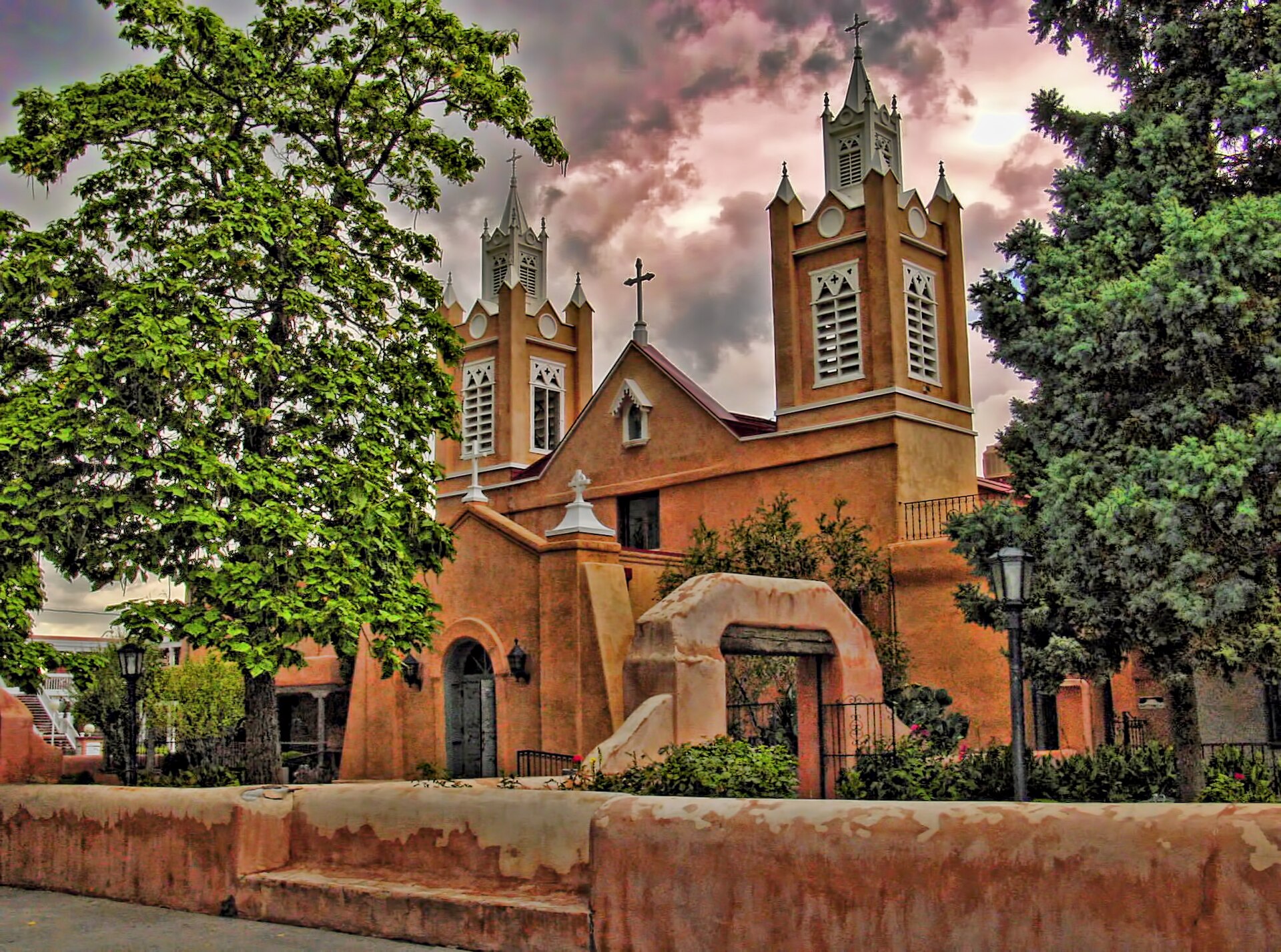
San Felipe de Neri Church
The parish dates to the founding year: 1706. The building standing on the plaza's north side was begun in 1793 and is the only structure in Old Town proven to date from the Spanish colonial period. This is still an active parish.
What you see is layered rather than pure. The adobe walls are colonial. The pitched roof and the twin Gothic Revival spires arrived around 1861 under Bishop Jean-Baptiste Lamy, who spent his tenure pointing New Mexico's adobe churches toward the France he came from. The pressed-tin ceiling went in during a 1916 remodel. Three centuries of taste, stacked on one wall.
ABQ BioPark
A short walk west of the plaza, the city runs its four-part BioPark along the same stretch of Central: an aquarium built around a Rio Grande-to-Gulf journey, a botanic garden with a walled Spanish-Moorish courtyard and a glass conservatory, the zoo a mile south, and the fishing lakes at Tingley Beach in between. Now that is one stop that can reliably absorb a whole afternoon, especially with children in tow!
Sacred Clay and Silver
Indian Pueblo Cultural Center
Located north of Old Town, the Indian Pueblo Cultural Center (IPCC) is jointly owned and operated by the 19 Indian Pueblos of New Mexico. The main building sweeps in a horseshoe curve around a massive circular open-air kiva plaza. The core permanent exhibition, "We Are of This Place," presents history, spiritual values, and artistic traditions directly through Pueblo voices.
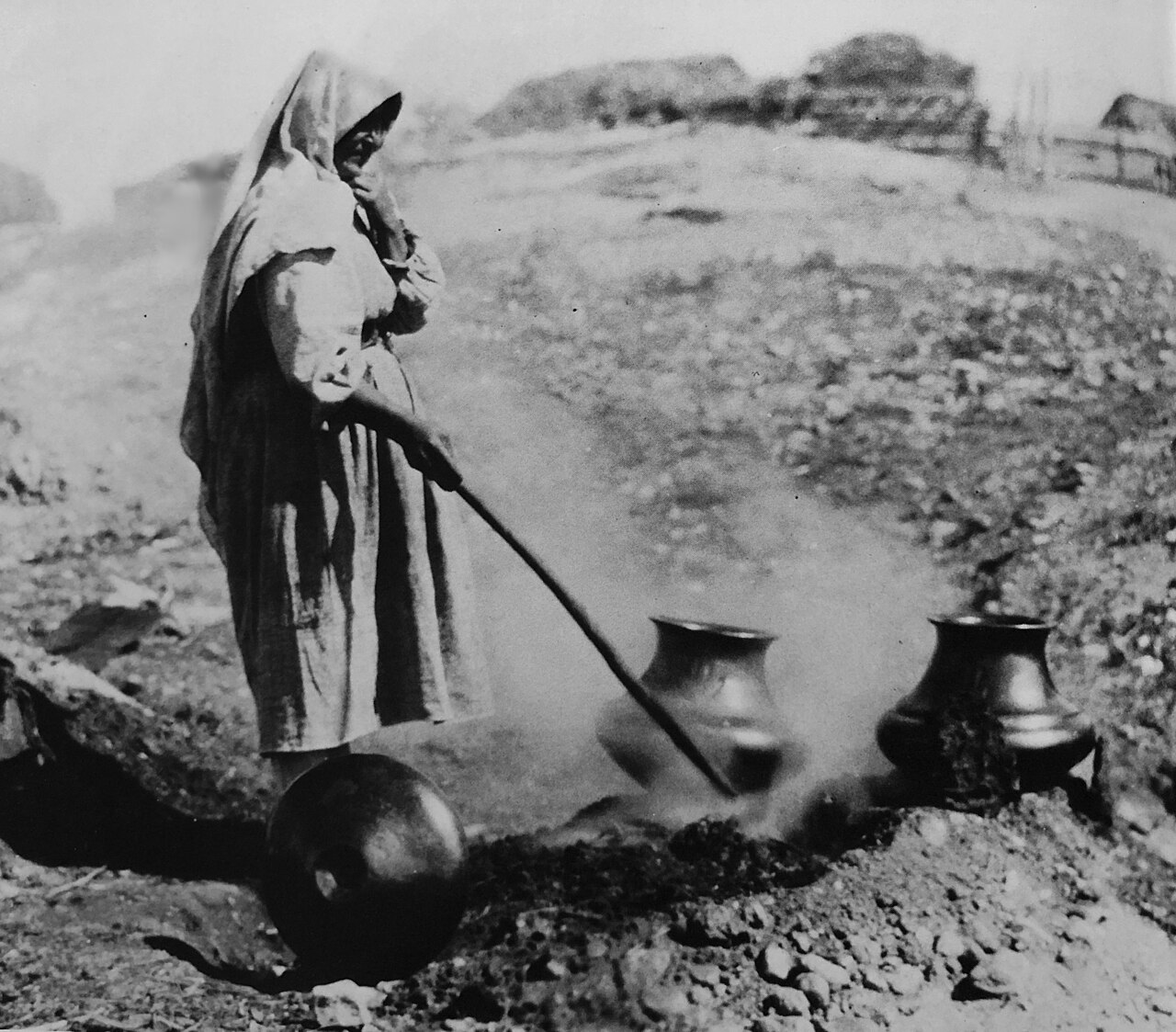
The collection houses masterworks of textiles, Katsina carvings, and crucially, Pueblo pottery. Made entirely without a potter's wheel, the clay is hand-coiled, smoothed with river stones passed down through generations, and painted with natural mineral slips and yucca leaf brushes before being baked in open ground fires. The results range from the paper-thin white vessels of Acoma Pueblo to the famous Black-on-Black polished pottery pioneered at San Ildefonso.
Equally masterful is the lapidary work. Turquoise, known as the "Sky Stone," has been mined here for 2,000 years. It is paired with heavy Navajo sterling silver stampwork, delicate Zuni needlepoint setting, and ancient Kewa (Santo Domingo) shell mosaic inlay.
The Watermelon Mountains
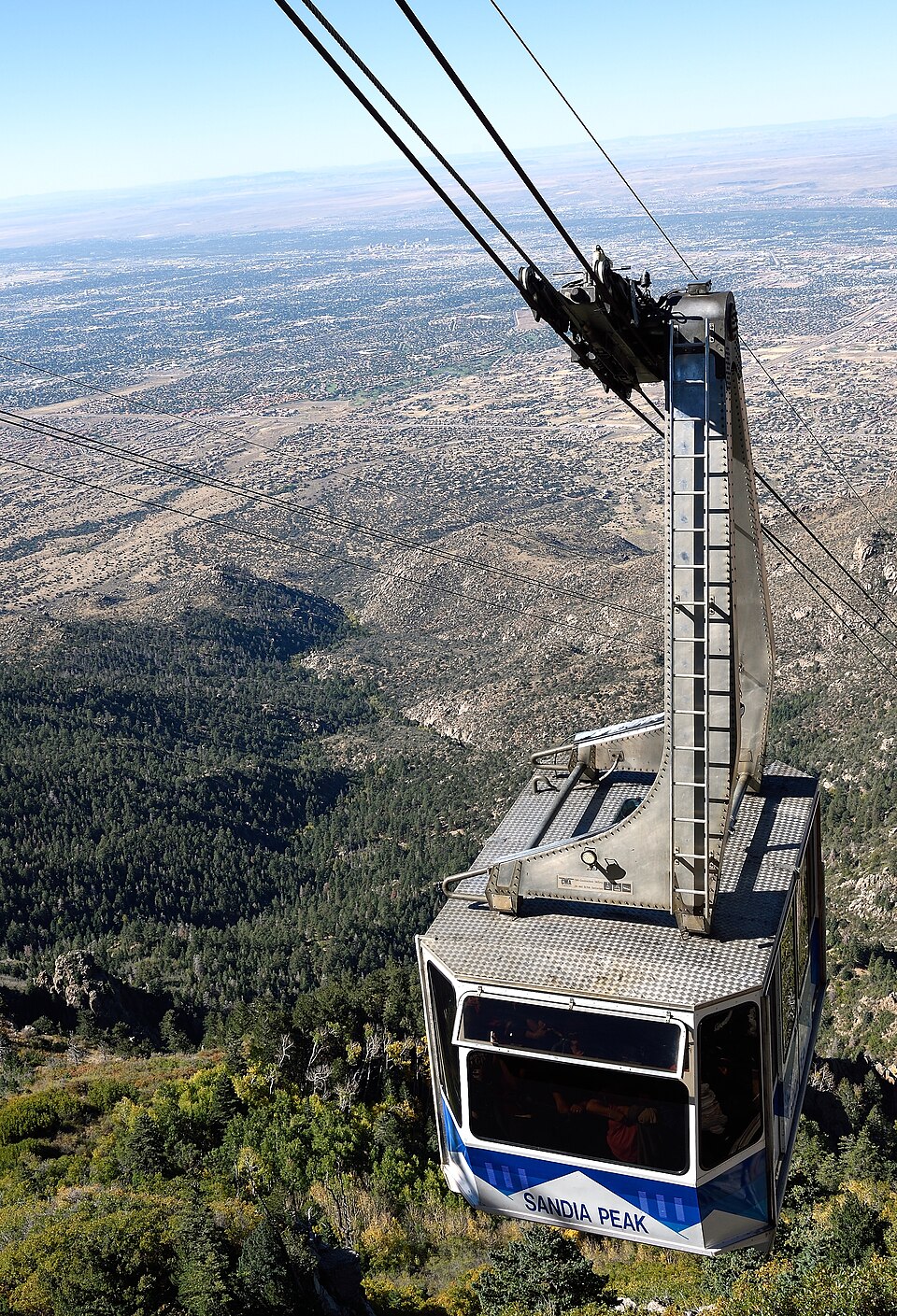
Sandia Peak Tramway
The Sandias are a fault block, tilted up along the eastern edge of the Rio Grande rift over the last ten million years and presenting the city with a mile-high wall of pink granite. Sandía is Spanish for watermelon. The tidy explanation — that the rock flushes red at sunset over a rind-green band of conifers — is the popular one. Sandia Pueblo's own account is that Spaniards arriving in 1540 mistook the squash gourds growing there for watermelons, and the name stuck to the mountain afterward.
The tramway has been carrying passengers up that wall since May 1966. It runs 2.7 miles (4.3 km) and lifts you 3,819 feet (1,164 m) in about fifteen minutes, to a terminal at 10,378 feet (3,163 m). It held the record as the world's longest aerial tramway until 2010, and still has the third-longest single unsupported span anywhere: 7,720 feet (2,353 m) of open air between the second tower and the top.
What you get at the top is the reason to go: most of central New Mexico in one sweep! The city laid out below like a circuit board and, if you time it for dusk, the whole Rio Grande valley going gold while the lights come on.
Monuments to Science, Art, and Deep Time
.jpg)
The Albuquerque Museum
Nestled at the edge of Old Town, the museum's history collection provides an unprecedented look at the encounters that shaped the American Southwest, featuring 15th-century Spanish colonial armor and the celebrated 1728 manuscript map of the region. Its permanent art exhibition showcases over 10,000 works, including major paintings by Georgia O'Keeffe and traditional Indigenous bultos.
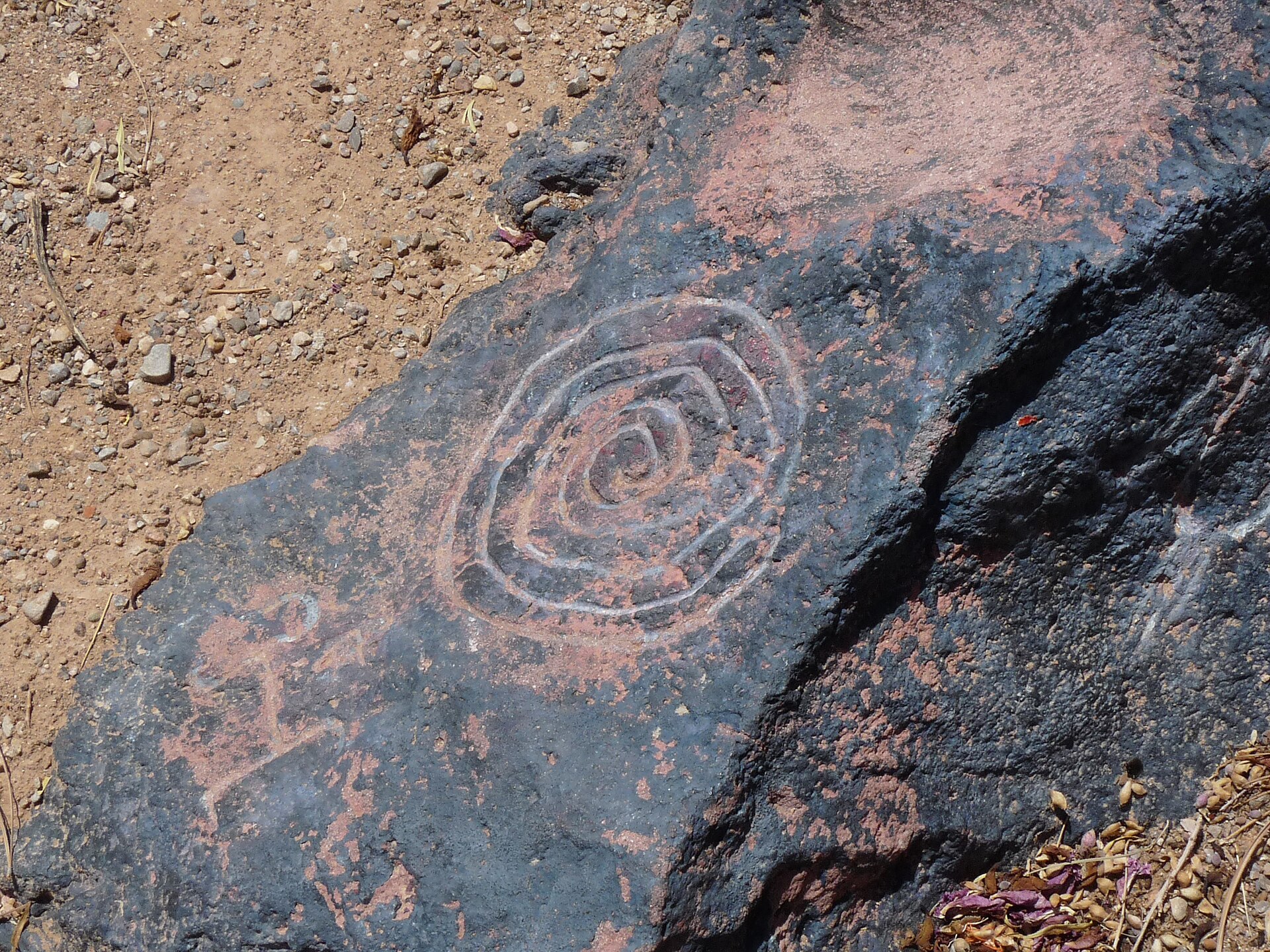
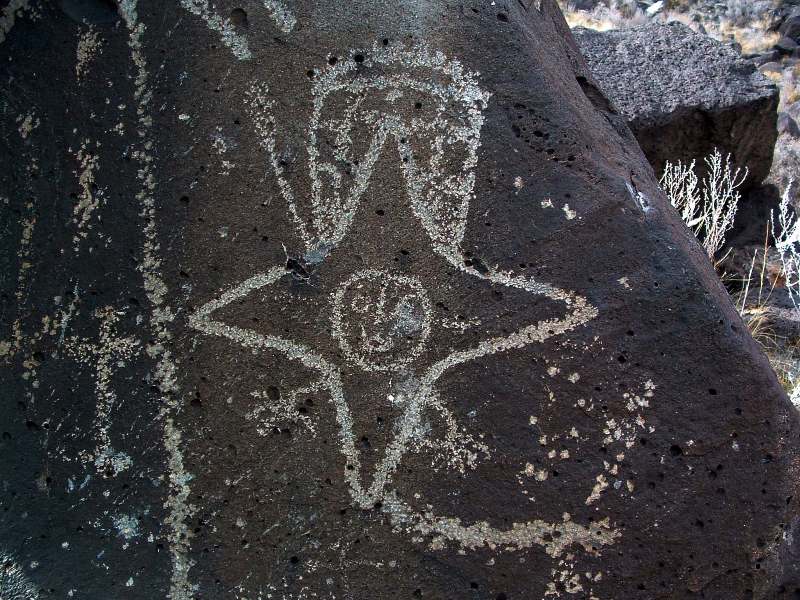
Petroglyph National Monument
Stretching 17 miles (27.4 km) along the West Mesa, this massive volcanic escarpment preserves an estimated 24,000 to 25,000 carved petroglyphs. Chiseled into the dark basalt primarily by Ancestral Puebloans between 1300 and 1680 CE, these geometric spirals, star beings, and macaw figures remain sacred, living expressions left by the direct ancestors of today's Pueblo people.
.jpg)
National Museum of Nuclear Science & History
Situated on the eastern plateau, this museum carries a solemn and awe-inspiring ambiance as the nation's official resource for nuclear history. Its nine-acre outdoor Heritage Park confronts visitors with the immense physical scale of Cold War aviation, featuring a 100-foot (30 m) replica of the Trinity Tower and a massive B-52B Stratofortress — the one surviving B-52 known to have dropped an atomic bomb during Pacific testing.
The Balloon Fiesta
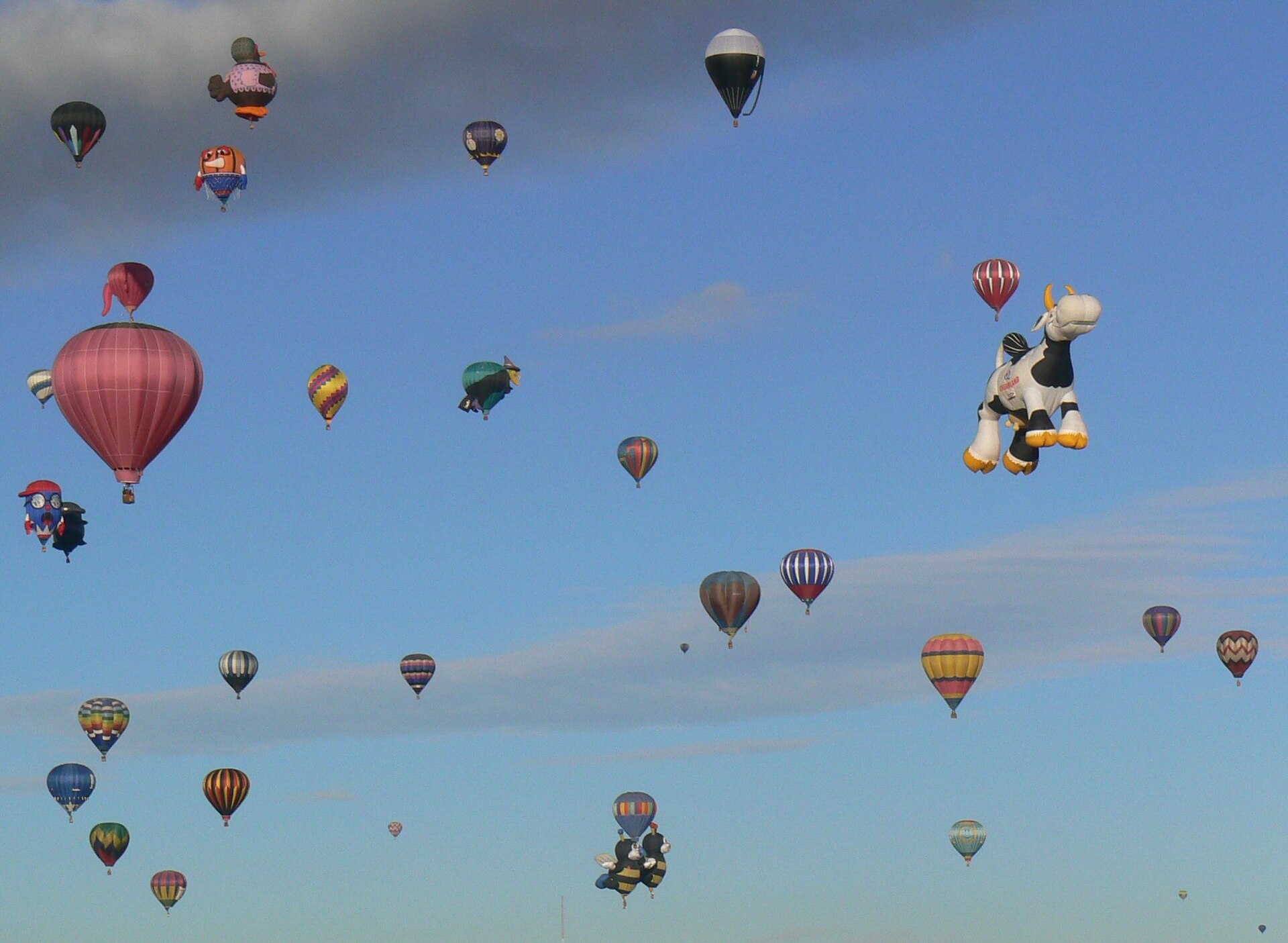
The largest balloon event on Earth
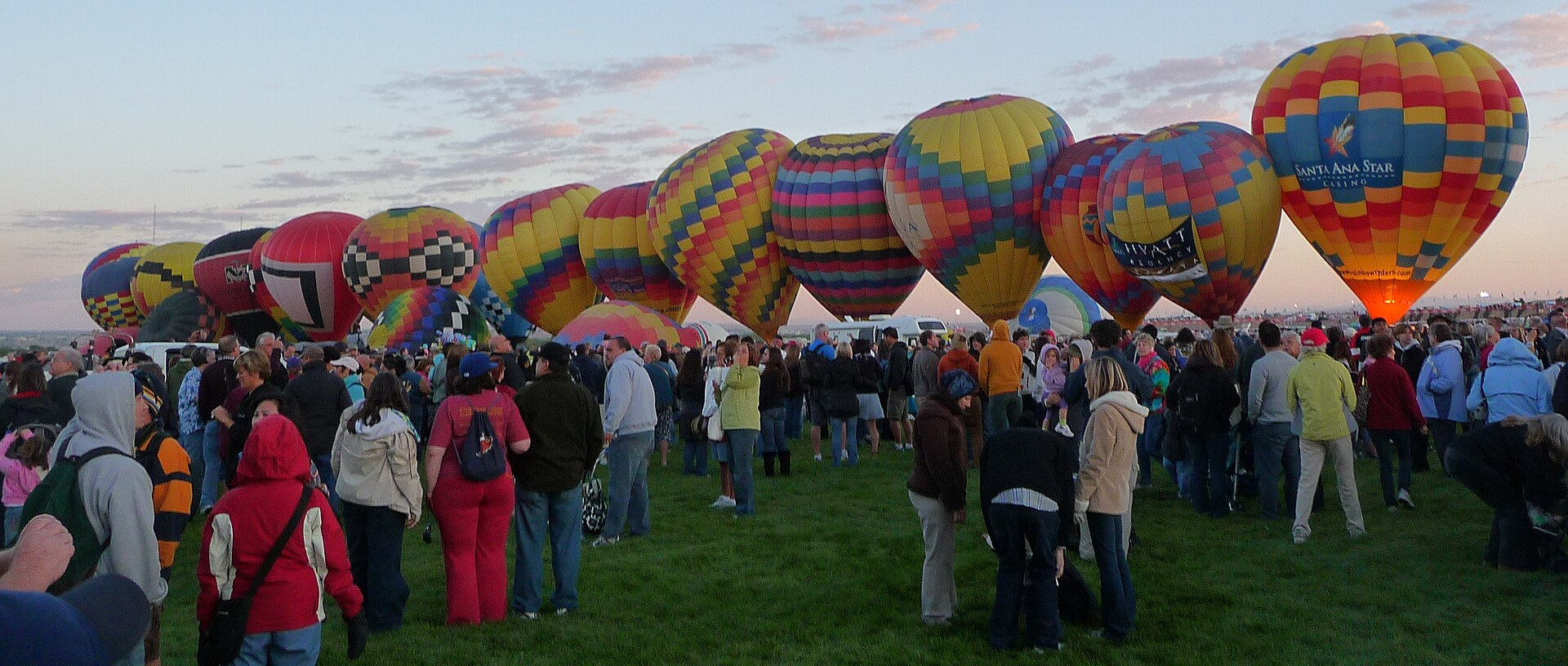
Every October, the Albuquerque International Balloon Fiesta takes over the sky: over 500 balloons lifting off together at sunrise, and after dark the "Night Magic" glows, where crews stay tethered and fire their burners in sequence until the whole field lights from inside.
It happens here rather than somewhere else because of the air. On a still autumn morning the valley stacks its winds in opposing layers — cold air draining off the Sandias runs south near the ground while the flow a few hundred feet up runs north — so a pilot with no engine and no steering can climb or sink between layers and fly a circuit back to where they started. Balloonists call it the Albuquerque Box. It lasts a few hours, and it collapses the moment the sun clears the ridge and warms the ground.
The Show
Breaking Bad and its long tail
For a great many visitors, Albuquerque is first and foremost the city where a high-school chemistry teacher started cooking methamphetamine. Breaking Bad ran on AMC from 2008 to 2013, and the prequel Better Call Saul ran another six seasons through 2022 — fifteen years of television, all of it shot on location here rather than on a soundstage standing in for somewhere else.
That distinction is the whole point, and it cuts both ways. The locations are real working addresses, not a preserved set: the car wash, the courthouse, the taquerías. The most famous of them is the Twisters on Isleta Boulevard in the South Valley, which played Gus Fring's Los Pollos Hermanos and is otherwise an ordinary fast-food restaurant selling breakfast burritos to people who have never seen the show. The ABQ Trolley Co. runs the sanctioned tour if you want the circuit narrated.
One address is deliberately missing from that circuit and from this page. The house used as the White residence is a private home whose owners have spent more than a decade being photographed, trespassed on and pelted with novelty pizzas by people re-enacting a scene; they eventually fenced the property. It is on no reputable tour, and the neighborly thing is to leave them alone.
The industry stayed after the cameras moved on. New Mexico's film incentives had drawn the production here in the first place, and in 2018 Netflix bought Albuquerque Studios outright. A $30 million investment that made it their primary production facility. A show about a man destroying his city's opinion of itself ended up being the best economic development pitch Albuquerque ever made!
Red or Green?
.jpg)
New Mexican Cuisine
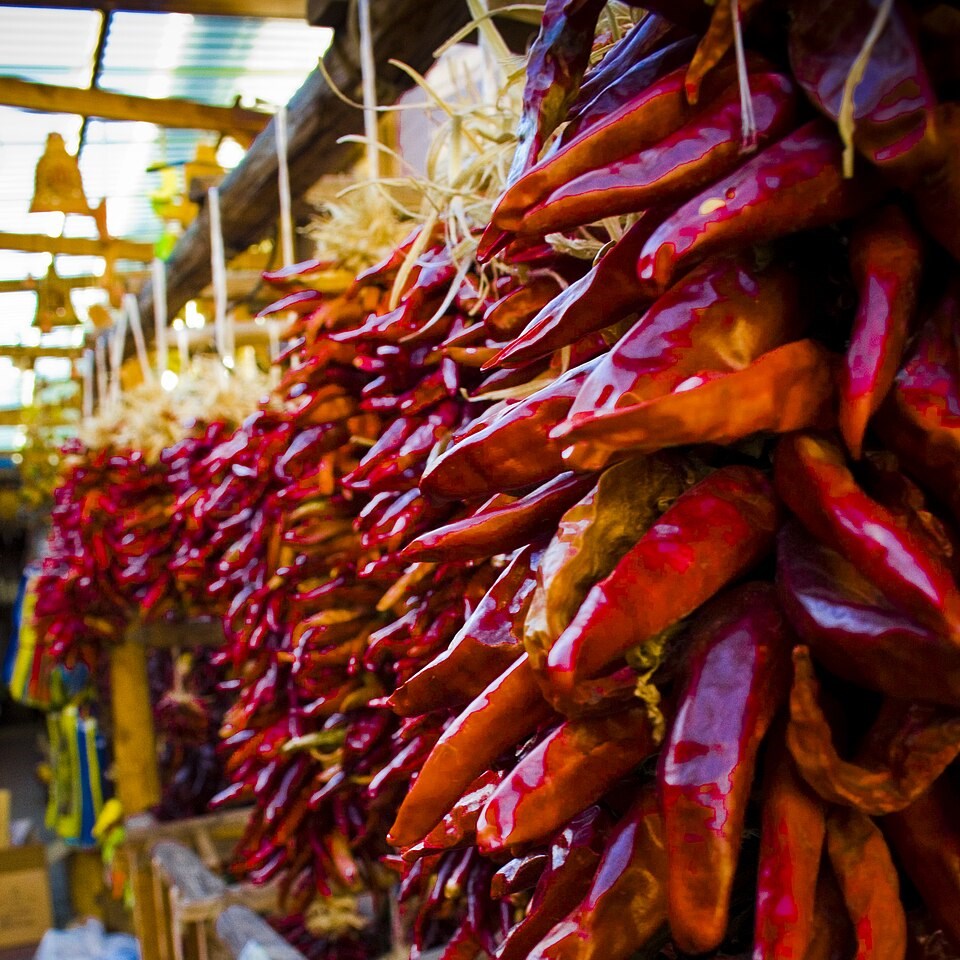
New Mexican cuisine is a fiercely protected, unique fusion of Pueblo Native American, Spanish colonial, and Mexican culinary traditions. The cornerstone of the entire foodways culture is the Hatch chile, grown in the southern valleys of the state.
When dining out in Albuquerque, you will inevitably be asked the Official State Question: "Red or Green?" This refers to your choice of chile sauce. (Answering "Christmas" yields a plate smothered in both). Iconic specialties include the world-famous Green Chile Cheeseburger, Carne Adovada (pork slow-braised in red chile), Blue Corn Enchiladas, and warm, pillowy sopaipillas served with a drizzle of raw honey.
Famous Natives
Albuquerque has produced notable figures in entertainment, tech, and activism, including:
If you've got a spare day
🚂 Santa Fe (~65 mi (105 km)) — Hop on the New Mexico Rail Runner Express train straight into the heart of the oldest capital city in the U.S. Explore the historic Plaza, the immersive art installation of Meow Wolf's House of Eternal Return, and the endless galleries of Canyon Road.
🏜️ Acoma Pueblo (Sky City) (~65 mi (105 km) west) — Continuously inhabited since 1150 AD, this breathtaking Pueblo is built atop a 367-foot (112 m) sheer sandstone mesa. Guided tours offer a glimpse into one of the oldest continuously inhabited communities in North America.
⛏️ The Turquoise Trail (NM-14) — Take the scenic route to Santa Fe along the eastern backside of the Sandias. Stop at the Tinkertown Museum in Sandia Park, the bohemian arts village of Madrid, and the historic 1880s turquoise mining town of Cerrillos.
Watch
Population: U.S. Census Bureau (2023 estimate).
MobTreks · a stop on the Southwestern trek.
No living hamsters were harmed in the production of this work.