The trek continues to
Corpus Christi
The Sparkling City by the Sea.
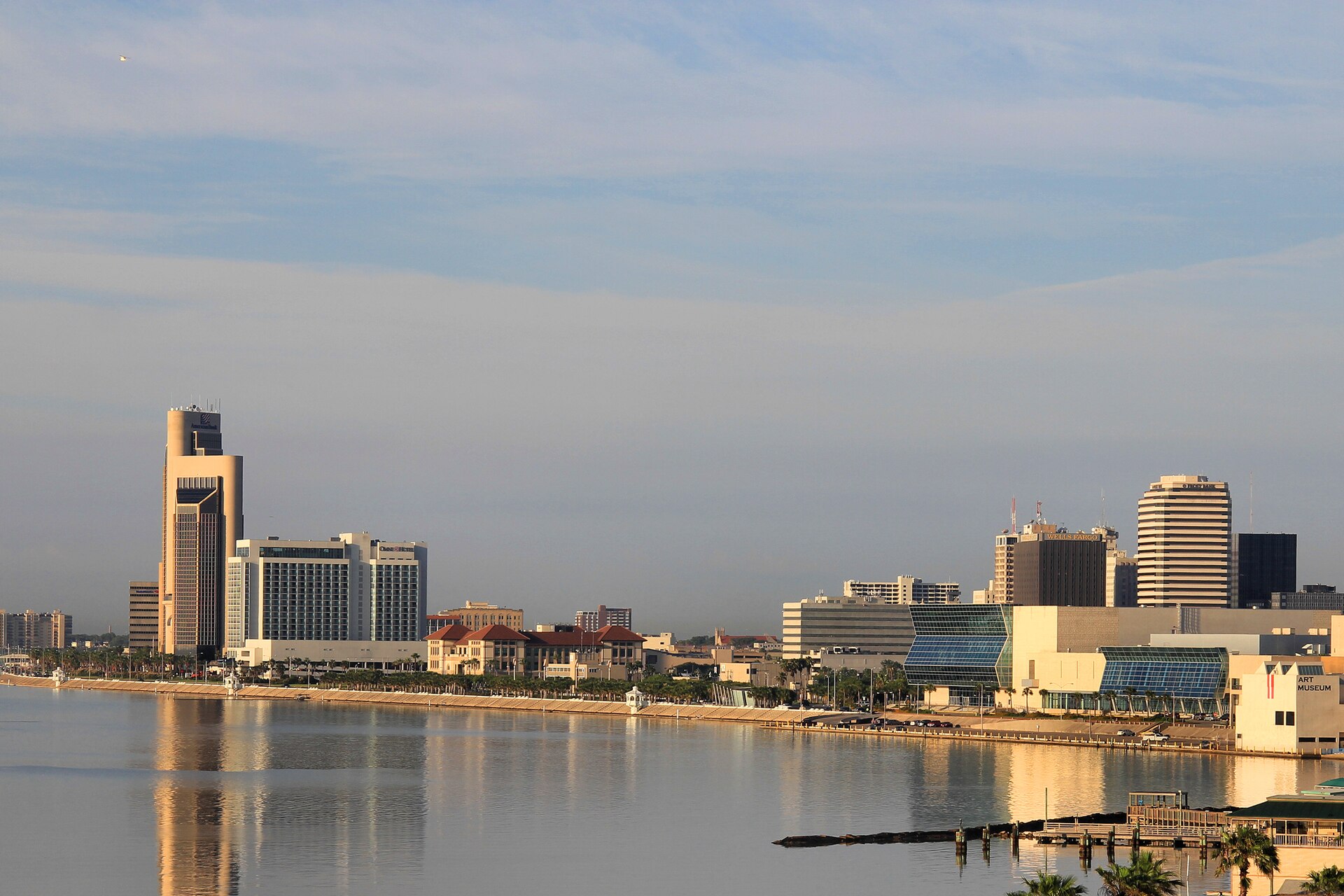
Set on a wide Gulf bay, Corpus Christi is Texas with sand between its toes. This is the town that gave America Whataburger and the world Selena — and the city that took in the U.S. Navy's "Blue Ghost", the WWII aircraft carrier that refused to stay sunk, and moored her on the bay for good. Leave the inland Texas stereotypes at the city limits: everything here, from the food to the skyline, runs through the water.
History & The Seawall
.jpg)
Corpus Christi traces back to 1839, when Henry Lawrence Kinney established a trading post on Corpus Christi Bay. The city was formally incorporated in 1852.
On September 14, 1919, a catastrophic hurricane struck the city with an 11.5-foot (2 m) storm surge. The official count was 284 dead, but the true toll is believed to be far higher, as bodies were swept into the bay and many victims were never identified.
The city's answer to the tragedy was the seawall. A three-year project (1939–1941), the mile-and-a-half-long stepped concrete armor along the downtown bayfront holds back the Gulf to this day — and its top is now downtown's favorite evening walk.
A new cable-stayed Harbor Bridge opened over the ship channel in June 2025. At 538 feet (164 m), it is the tallest structure in South Texas and the longest bridge of its kind in the country. It replaces the old steel-arch Harbor Bridge, an iconic part of the Corpus Christi skyline for decades. Our photo here shows the new bridge while it was nearing completion.
USS Lexington, "The Blue Ghost"
_(27166009028).jpg)
The USS Lexington, an Essex-class aircraft carrier commissioned in 1943, earned 11 battle stars and a Presidential Unit Citation in the Pacific.
Her nickname, "The Blue Ghost," stems from an atypical blue paint scheme forced by wartime shortages and, perhaps, from a legend born in the Pacific: Japanese "Tokyo Rose" propaganda broadcasts claimed, more than once, that the carrier had sunk... yet time and again, there she was, back in the fight!
Donated in 1992, the Lexington now serves as a museum ship: you can roam 16 decks and inspect more than 20 restored aircraft. She logged her nine-millionth visitor in 2023.
Texas State Aquarium
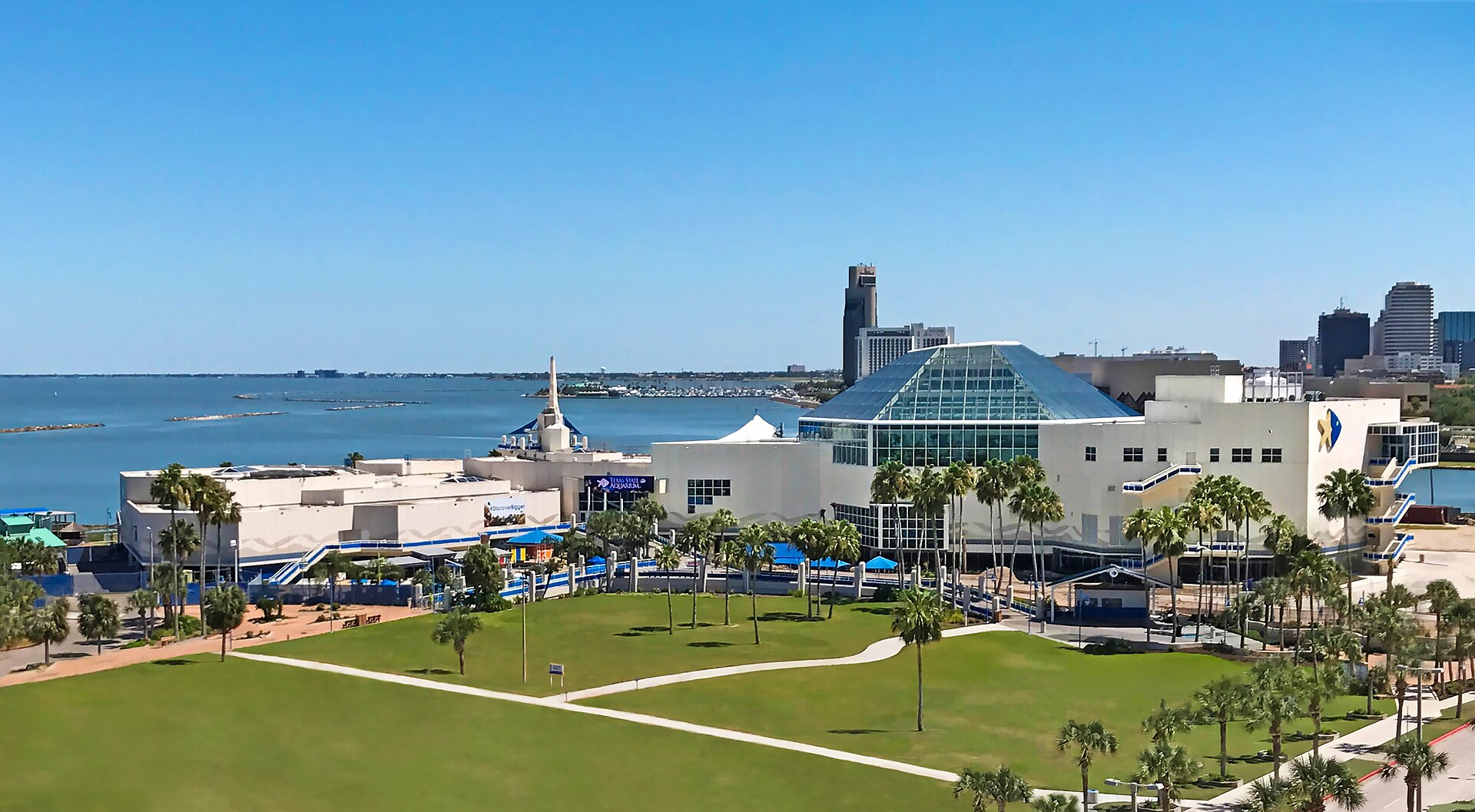
Spanning 7.3 acres right on the edge of the ship channel, the Texas State Aquarium is the largest in the state and serves as the region's premier window into the Gulf and beyond.
Its massive 400,000-gallon Caribbean Sea habitat, where sharks and stingrays circle over a replica shipwreck, gets most of the attention. Yet, the AZA-accredited aquarium's footprint extends beyond the displays. It operates an on-site rescue center that rehabilitates thousands of injured coastal birds and sea turtles every year.
Sitting on North Beach immediately next to the Lexington, the aquarium and the carrier form a massive steel-and-glass skyline all of their own, just across the water from downtown.
Selena Quintanilla & the Mirador de la Flor
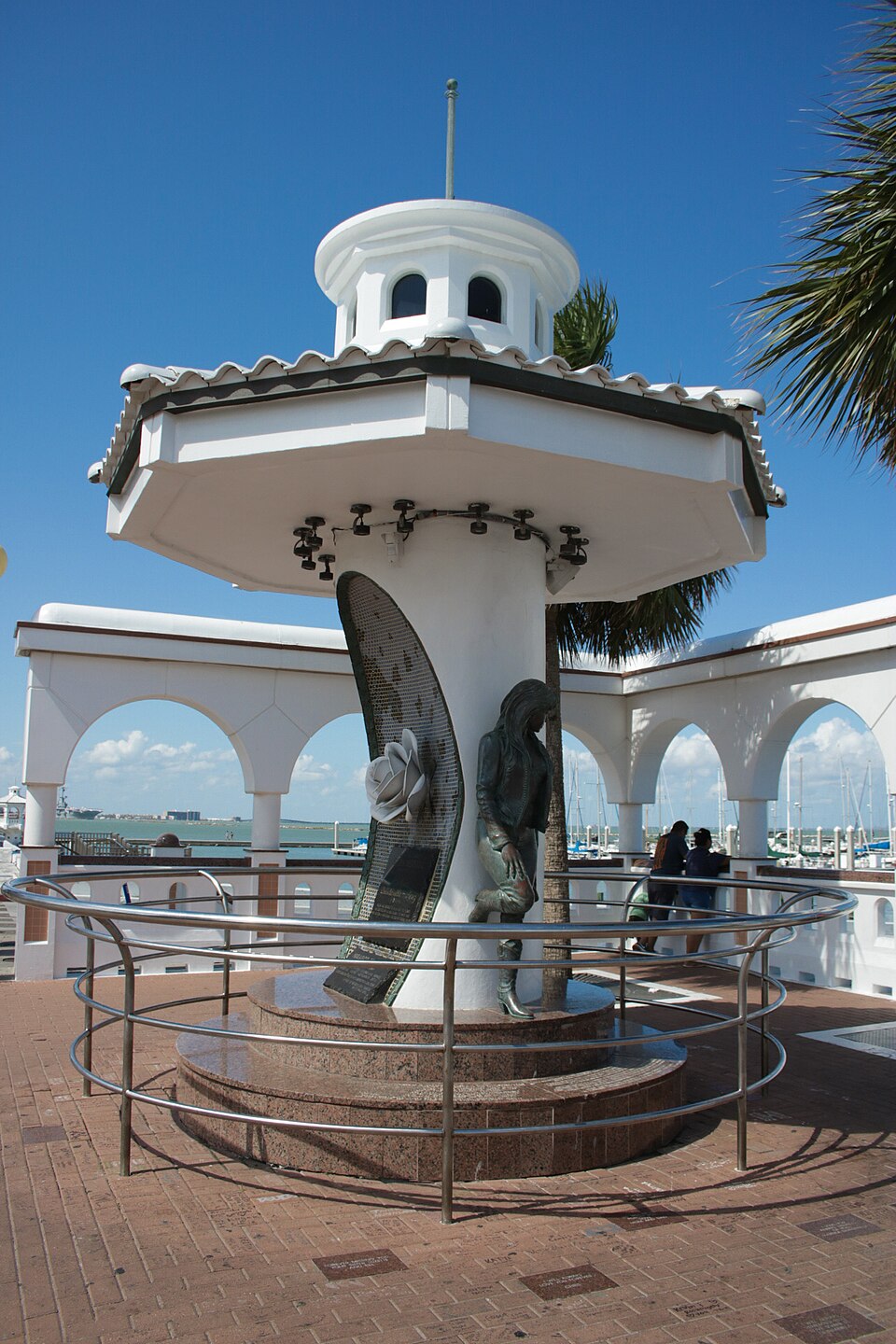
Selena Quintanilla, the Queen of Tejano, grew up in Corpus Christi and became the biggest star the genre has ever produced.
She was already famous nationwide when she was murdered here on March 31, 1995. She was only 23. Two weeks later, the governor proclaimed her birthday, April 16, "Selena Day" across Texas, and the city has kept her close ever since.
Her memorial, the Mirador de la Flor ("Overlook of the Flower"), was unveiled in 1997. The life-sized bronze by local sculptor H.W. "Buddy" Tatum overlooks the water from the downtown Bayfront Seawall, just a short walk from the marina's T-Head piers and McGee Beach.
Beaches & the Gulf
The coast isn't a side trip here — it's the whole point. Corpus gives you two kinds of beach: the wild, empty one you drive out onto, and the easy in-town kind minutes from downtown.
.jpg)
Padre Island National Seashore is the wild one — 70 miles (112.7 km) of what's often called the longest undeveloped barrier island in the world. Texas law lets you drive straight onto the sand and camp where you like, and the farther south you go, the emptier it gets.
It's the most important U.S. nesting beach for the endangered Kemp's ridley sea turtle. On summer mornings the park holds public hatchling releases — rangers carry the newborns down to the surf while a crowd watches from the dunes. It also sits on the Central Flyway, so the birding is serious. Conditions, driving rules, and the release schedule are at nps.gov/pais.
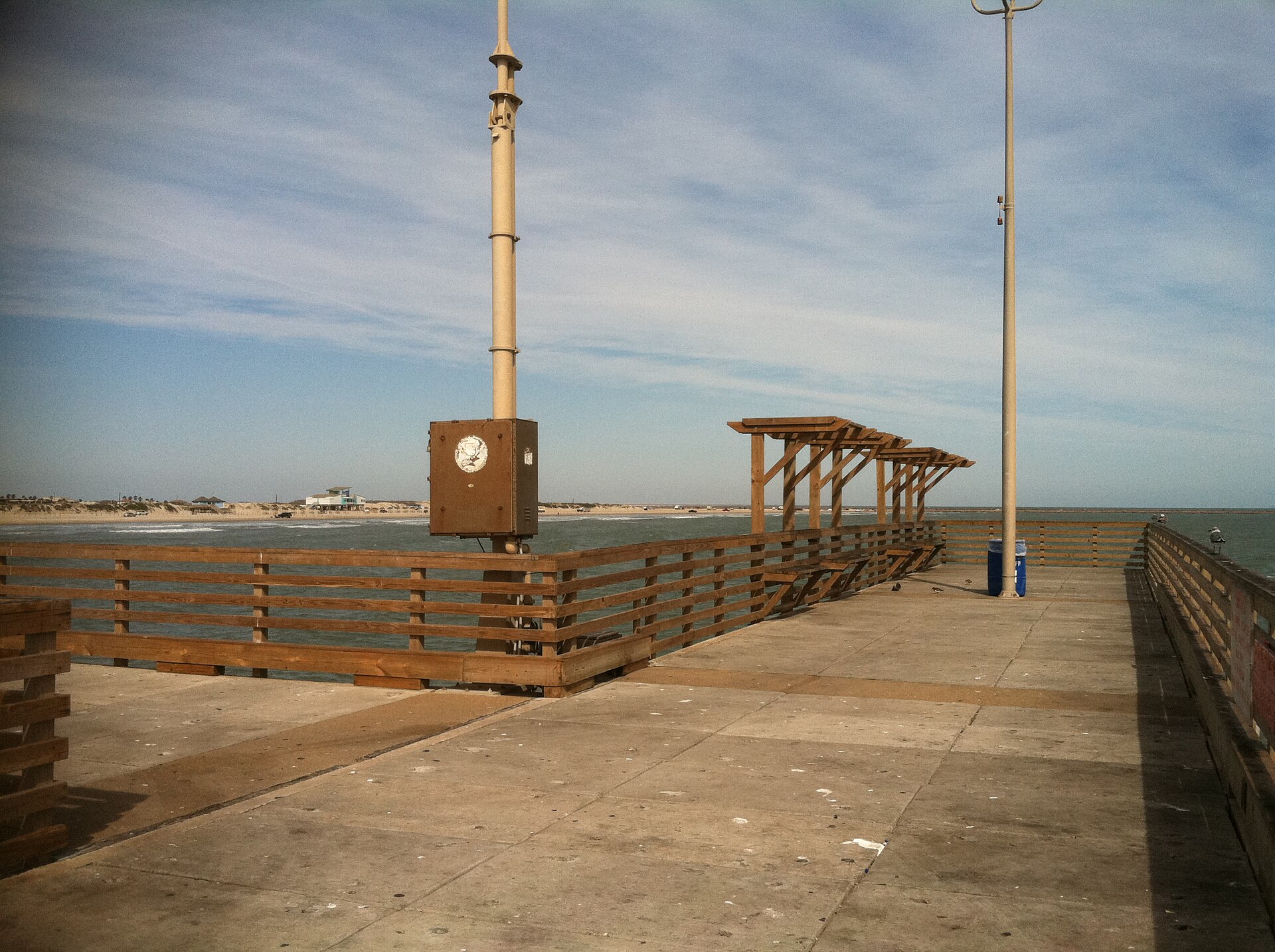
For the easy version, stay closer in. Mustang Island State Park has five miles of Gulf beach just up the island, and Port Aransas at its tip runs on fishing piers, surf, and the ferry. North Beach keeps things calmer on the bay side, right by the Lexington and the aquarium.
You don't even have to leave downtown to get in the water. McGee Beach is a small, shallow swimming beach on the seawall by the marina, calm enough for young kids. And the same steady wind that keeps the city cool makes the Laguna Madre one of the country's best flat-water spots for windsurfing and kiteboarding.
.jpg)
And then there's the bayfront itself. Downtown meets the water along the seawall promenade, where the marina's T-head piers reach out into the bay and McGee Beach sits a few steps away. In the evening, once the heat lets go and the breeze finally wins, this is where Corpus comes out to walk.
Art Museum of South Texas
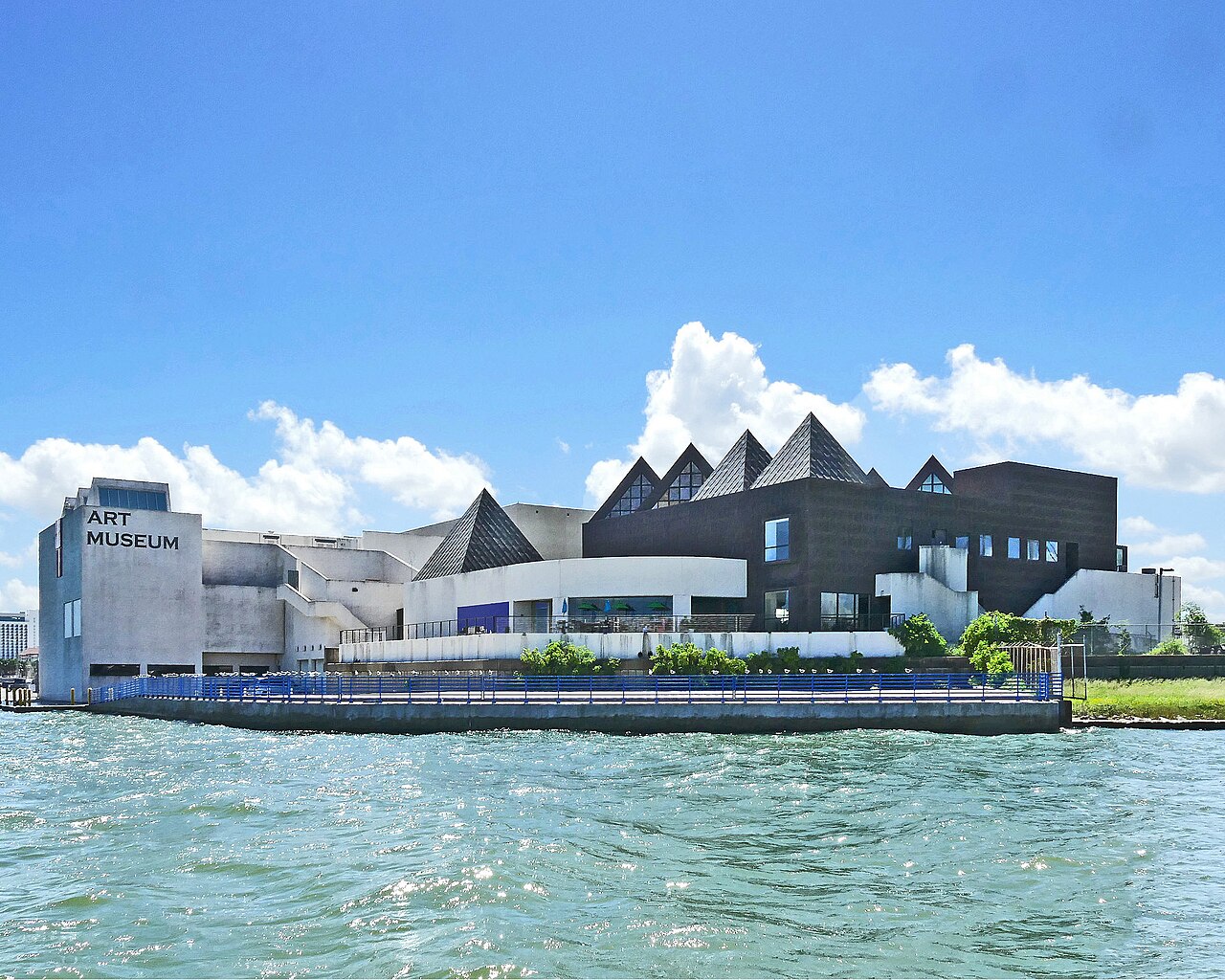
Inside, the Art Museum of South Texas holds a collection of more than 1,850 works centered on the art of the Americas, with a deep pull toward Texas and Mexico — paper, paintings, photography, glass, and ceramics rotating alongside traveling shows.
The building is a draw in its own right. The original bay-facing structure of poured white concrete was designed by Philip Johnson, a founder of postmodern architecture; in 2006 Mexican architect Ricardo Legorreta added a wing that nearly doubled its space.
Gave Away the Burger, Kept the Shrimp
Corpus Christi gave the world a burger and kept the seafood for itself. Whataburger started here in 1950 — Harmon Dobson's 25-cent stand on Ayers Street took in $50 on opening day and was moving 551 burgers a day by day four. The original is long gone, but a replica of the 1950 stand fronts a working Whataburger on South Staples Street, and the orange-and-white "W" flies over Whataburger Field downtown, home of the Hooks, the Houston Astros' Double-A club. The chain tells its own story at stories.whataburger.com.
That's the export. What Corpus actually eats comes out of the Gulf — shrimp, oysters, redfish, trout, and crab, with seafood tacos and shrimp baskets as the everyday default. Snoopy's Pier, a former bait stand on the Intracoastal Waterway, has been the laid-back institution since 1980 — order at the counter and eat right over the water. Next door, Doc's Seafood & Steaks does the sit-down version. Downtown, Water Street Oyster Bar has shucked Gulf oysters in a converted transmission shop since 1983.
Famous Natives
Corpus Christi has been the birthplace and hometown of numerous notable figures.
If you've got a spare day
🚤 Port Aransas (~30–40 min via a free, 24/7 TxDOT ferry; the crossing itself takes under 10 minutes, though waits can run long on peak weekends) — beaches, fishing, and dolphin sightings right from the ferry deck.
🐎 King Ranch, Kingsville (~30–40 min) — founded in 1853, roughly 825,000 acres today, the largest ranch in the continental U.S. and developer of the Santa Gertrudis cattle breed.
🎣 Rockport (under an hour) — sport fishing, sailing, and premier birding at the junction of two flyways.
🦢 Aransas National Wildlife Refuge (a similar drive to Rockport) — winter home of the world's last wild flock of whooping cranes. The flock was down to 15 birds in 1941; the 2024–25 count found a record 557.
Watch
Population: 2020 U.S. Census.
MobTreks · a stop on the Southern trek.
No living hamsters were harmed in the production of this work.